

With all the noise around Marxism and socialism lately, I keep coming back to a story from my own family.
Back in the 1980s, someone close to me spent time in Pul-e-Charkhi — the infamous prison outside Kabul. The charge, if you could call it that, was “suspected links to anti-government elements.” In practice, this meant almost nothing. He wasn’t alone. Nearly every family had someone taken this way: no evidence, no trial worth the name, just guilt assigned by proximity. A cousin, a neighbor, a coworker with the wrong opinion — that was often enough.
Years later, he told us a story from inside.
The Portrait in the Yard
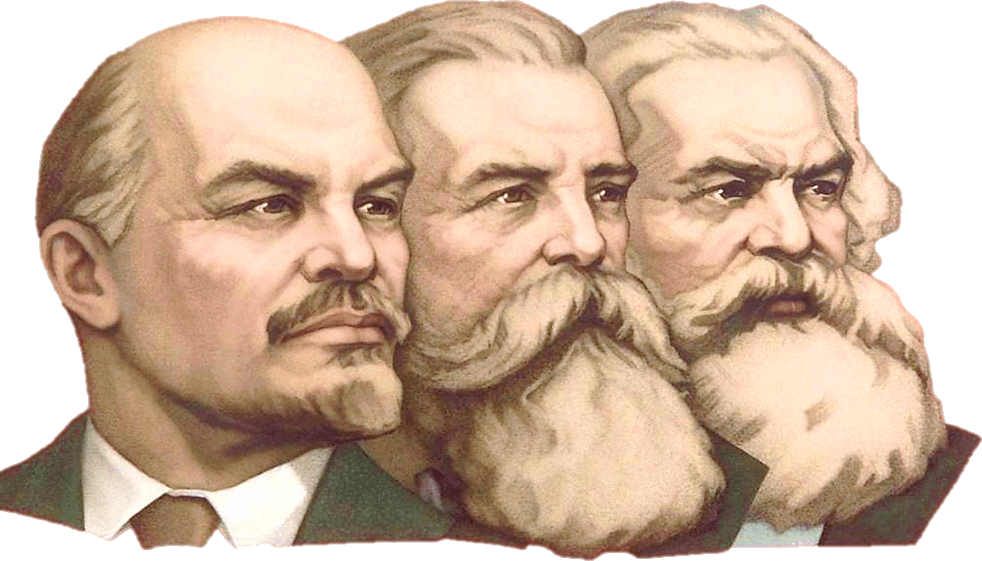
One day, out in the prison yard, the guards were carrying a massive portrait of Marx, Engels, and Lenin, likely for some state occasion. It must have been heavy, because they stopped to adjust their grip and catch their breath.
Nearby, another prisoner stood watching the portrait, shaking his head slowly. My relative asked him what he was thinking.
The man said: “I just thought, ‘I wonder if these three were actually thinking this would happen and would be happy about it.'”
Why It Stuck
Here was a man locked up because of the practical fallout of Marx, Engels, and Lenin’s ideas — and his first instinct wasn’t rage at them. It was curiosity, almost generosity. He wondered whether the men in the portrait would have recognized what was done in their name. Whether they’d have been horrified by it, too.
I’m not telling this story to score points in whatever argument is happening online this week. I’m telling it because history doesn’t cancel itself out.
The atrocities happening now, wherever they’re happening, are real and worth naming. But they don’t erase what came before. The USSR and the regimes it propped up in Afghanistan left real scars — real people, real families, real prisons with real portraits hanging over real suffering.
Somewhere, a man in a yard once looked up at three faces on a wall and wondered if they’d be ashamed.